Project Overview
This project involved integrating AI capabilities into an existing product to enhance user experience and provide personalized recommendations. The challenge was to implement advanced AI functionality while maintaining a human-centered approach that users would trust and find valuable rather than intrusive or overwhelming.
Client
Technology Company
Timeline
5 months
My Role
UX Consultant
The STAR Approach
Situation
The client, a technology company with a successful productivity platform serving over 2 million users, was facing increasing competition from newer products that offered AI-enhanced features. Their existing platform had a loyal user base who valued its reliability and straightforward functionality, but user research indicated growing interest in more intelligent, personalized experiences. The company needed to evolve their product without alienating existing users or compromising the core values that had made it successful.
The challenge was multifaceted: the company needed to identify which aspects of the user experience would benefit most from AI enhancement, determine how to implement these features in a way that felt natural and valuable rather than intrusive, and ensure that users maintained a sense of control and understanding of how AI was being used. Additionally, there were technical constraints related to data privacy, processing capabilities, and integration with the existing architecture.
Task
As the UX Consultant specializing in AI implementation, my responsibilities included:
- Conducting research to identify high-value opportunities for AI enhancement that aligned with user needs and business goals
- Developing a framework for human-centered AI implementation that would maintain user trust and control
- Creating design patterns for AI interactions that would feel intuitive and valuable to users
- Designing interfaces that effectively communicated AI capabilities and limitations to users
- Developing strategies for onboarding users to new AI features and gathering feedback
- Collaborating with data scientists and engineers to ensure technical feasibility and ethical implementation
- Establishing metrics to measure the impact of AI features on user experience and business outcomes
- Creating a roadmap for phased implementation and continuous improvement of AI capabilities
- Designing transparency mechanisms to help users understand how AI was using their data
- Ensuring accessibility and inclusivity in AI-enhanced features
Action
I implemented a comprehensive approach to integrating AI capabilities into the product:
Research & Opportunity Identification
I conducted extensive research including 25 user interviews, analysis of support tickets and feature requests, competitive analysis of 12 AI-enhanced products, and workshops with stakeholders. I created an AI opportunity map that identified high-value areas for enhancement, prioritizing features that would provide clear user benefits while being technically feasible and ethically sound.
Human-Centered AI Framework
I developed a framework for human-centered AI implementation based on five principles: transparency, user control, value delivery, progressive disclosure, and continuous learning. This framework guided all design decisions and ensured that AI features would enhance rather than replace human capabilities. I created design guidelines that operationalized these principles for the product team.
Feature Design & Prototyping
Based on the opportunity map and framework, I designed three key AI-enhanced features: intelligent content suggestions, automated workflow optimization, and personalized insights. For each feature, I created multiple design concepts, exploring different approaches to presenting AI capabilities and user controls. I developed interactive prototypes that demonstrated how these features would work in practice.
User Testing & Iteration
I conducted 4 rounds of user testing with 8-10 participants per round, focusing on different aspects of the AI implementation. Each round provided insights that informed design iterations. Key findings included the importance of clear feedback about AI actions, user preferences for explicit opt-in to AI features, and the need for granular controls over data usage. I worked closely with data scientists to refine the AI models based on user feedback.
Transparency & Control Mechanisms
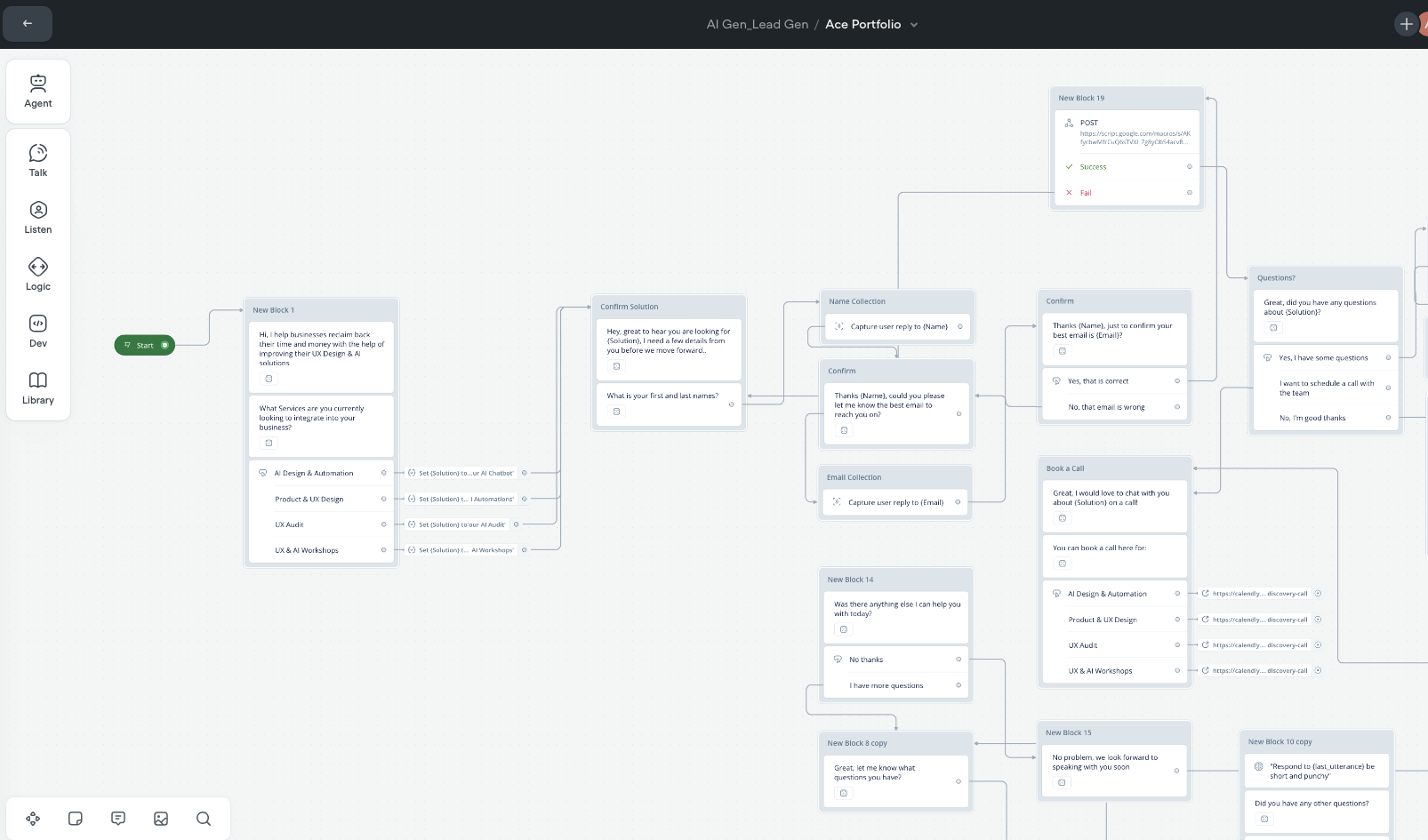
I designed a comprehensive system for AI transparency and user control, including: an AI settings dashboard where users could view and adjust how AI was used in their experience; contextual explanations that appeared alongside AI-generated content; and a feedback mechanism that allowed users to improve the AI's understanding of their preferences. I created detailed wireframes and specifications for these mechanisms.
Onboarding & Education
I designed an onboarding experience that introduced AI features gradually, allowing users to explore capabilities at their own pace. This included interactive tutorials, contextual help, and progressive disclosure of advanced features. I created educational content that explained AI concepts in accessible language, helping users understand the benefits and limitations of the technology.
Implementation Planning
I developed a phased implementation plan that prioritized features based on user value and technical complexity. I created detailed design specifications and collaborated closely with engineering teams to ensure feasibility. I established a measurement framework with clear metrics for success, including both quantitative measures (feature adoption, task completion rates) and qualitative indicators (user trust, perceived value).
Result
The AI implementation delivered significant improvements to the product experience and business outcomes:

- 85% of users opted in to at least one AI-enhanced feature within the first month of release
- User productivity (measured by completed tasks per session) increased by 26% for users who adopted AI features
- Time spent on routine tasks decreased by 34%, allowing users to focus on higher-value activities
- User satisfaction scores increased from 4.2/5 to 4.7/5 following the implementation
- Feature discovery improved by 42%, with AI suggestions helping users find relevant functionality
- User retention increased by 18% compared to the previous quarter
- Competitive win rate in sales conversations increased by 23% due to AI differentiation
- The product received industry recognition for its thoughtful approach to AI implementation
- 93% of users reported feeling in control of their AI experience, exceeding the target of 85%
- The company established a leadership position in human-centered AI design
The success of this project established a foundation for ongoing AI innovation within the company. The human-centered AI framework and design patterns have become core assets, guiding the development of new features and products. The transparent, user-controlled approach to AI has become a key differentiator in the market and has strengthened user trust in the brand.
Key Learnings
This project provided valuable insights into effective AI implementation:
- Trust is Fundamental: Users need to understand and trust AI systems before they will fully engage with them
- Control Creates Comfort: Providing clear user controls over AI features significantly increases adoption and satisfaction
- Value Must Be Immediate: AI features need to demonstrate clear value from the first interaction to drive continued use
- Transparency Requires Balance: Users want to understand how AI works without being overwhelmed by technical details
- Feedback Loops Are Essential: Creating mechanisms for users to improve AI performance builds engagement and improves outcomes
- Progressive Disclosure Works: Introducing AI capabilities gradually allows users to build comfort and confidence
- Human-AI Collaboration is Key: The most successful implementations enhance human capabilities rather than replacing them
- Ethics Cannot Be Afterthoughts: Ethical considerations must be integrated into the design process from the beginning